مدينة دمانيسي - أهم الأكتشافات في جورجيا

Dmanisi

Dmanisi is a townlet and site of paleoanthropological excavations in Southern Georgia:

For sure, Dmanisi is one of the most important archeological places not only in Georgia, but in the World. Discoveries made on the territory are of crucial importance in the study of Human Evolution.

Approximately 93km southwest of the nation’s capital, Tbilisi.

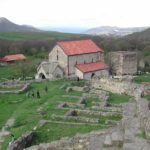
Being a site of a medieval village located on the promontory at the confluence of Mashavera and Phinezauri River.

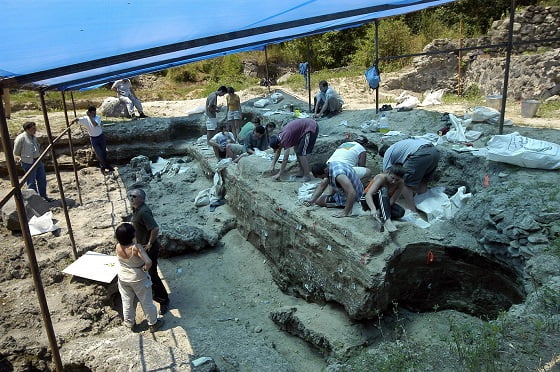
Archeological excavations of the ruins on Dmanisi area began in the 1930s, but systematic excavations were not undertaken until the 1980s. Very soon it became obvious that these cellars and pits dating from the medieval times contained prehistoric animal and human bones. The jawbone was found in 1991 and two skulls were recovered in 1999. These fossils were very close in their morphology to similarly aged specimens from Eastern Africa.

These animal and human bones are found with numerous tools and flakes coming from layers of ash and sandy sediment. That’s why they can be dated as about 1.8 million years old. There are also other methods of dating which indicates that mandible and crania must have washed into the site approximately 1.7 million years ago.  They are believed to be subspecies of Homo erectus. Dmanisi is thus one of the most ancient human settlements anywhere in Eurasia.
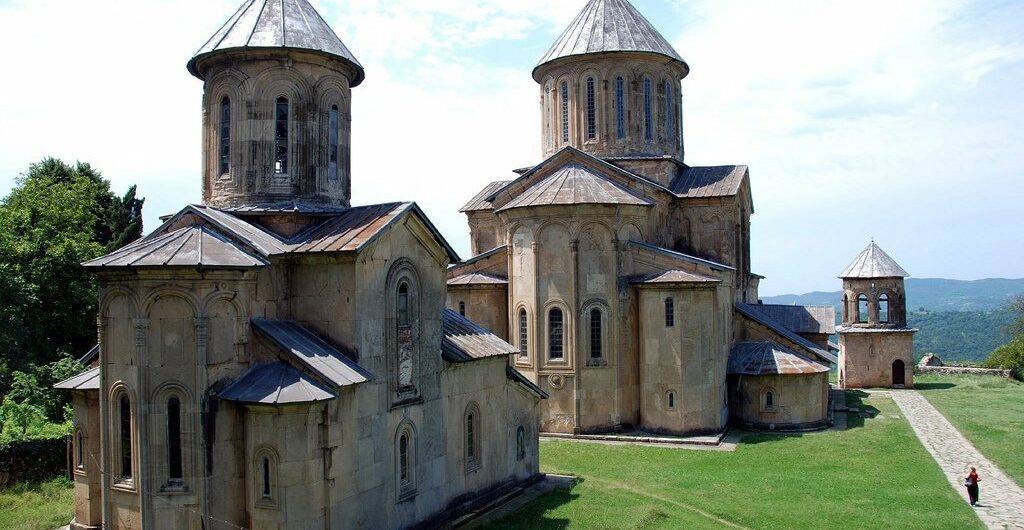
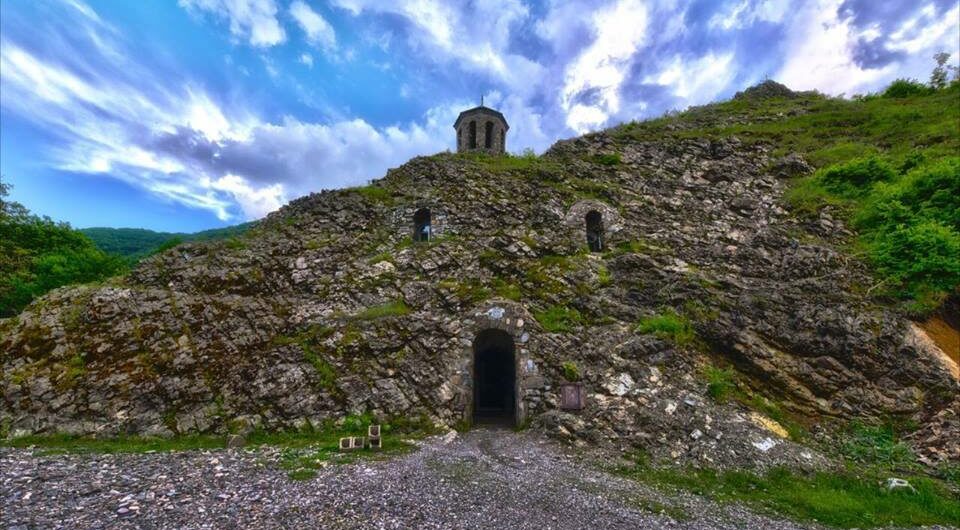
Gelati monastery – Kutaisi City

why Gelati monastery is important place :

Gelati monastery was not simply a monastery. It was a monastic complex which served as a center of science and education. An academy established there was one of the most important centers of culture in ancient Georgia.

Architecture of Gelati monastery :

Also, it should be mentioned,that monastery is important for its architecture as well.

There are mosaics, frescoes, enamel and metal works of paramount importance.

History of the place

The monastery belongs to the “Golden age”, which was a period of political strength and economic growth. Also, this Golden Age was between the reign of David VI (1089-11250 and Queen Tamar (1184-1213).

It was David who began building the monastery and it was completed by his successor Demetre.

13th and 14th century

Several buildings were added to the complex in 13th and 14th century, but then foreign invasions took place and Gelati complex was destroyed by fire in 1510 by Turkish invaders.

In 16th century the monastic complex became the residence of the Katholikos of western Georgia and the restoration work began, which continued throughout the 17th and 18th centuries.

When Georgia was annexed by the Russian empire in the 19th century, Gelati monastery lost its Episcopal role.

Grave of David the Builder in Gelati.

Also, There is a grave of David the Builder in Gelati.

He was the very king who began building the monastic complex.

The gates of Ganja taken as trophies by the king Demetre can be found near his grave.

Gelati monastery was included in the UNESCO World Heritage Site in 1994.

Also it was listed in the 2008 World Monuments Watch List of 100 Most Endangered sites in order to draw attention to deterioration.

Sarkine

The city, Sarkine was a town situated 8 km west of Mtskheta on the left bank of Mtkvari River.

It is mentioned in the old Georgian chronicles among other towns. This territory Sarkine, is known for its archeological importance.  In 1946-1948 an adobe tower was excavated here on the westernmost slopes of the Savanati mountain range.

Also Iron Gate, remnants of timber and adobe buildings and the town wall were unearthed at the place.

The settlement surrounded by the adobe wall was excavated in 1954-1967.

This settlement must have been part of the town Sarkine. Within the wall a lot of buildings were discovered, among them iron smelting, goldsmith and blacksmith shops.  Some ornamented architectural details were also uncovered. These archeological findings date mostly from the 3rd c. BC and 2nd c. AD.

Нокалакеви

Nokalakevi

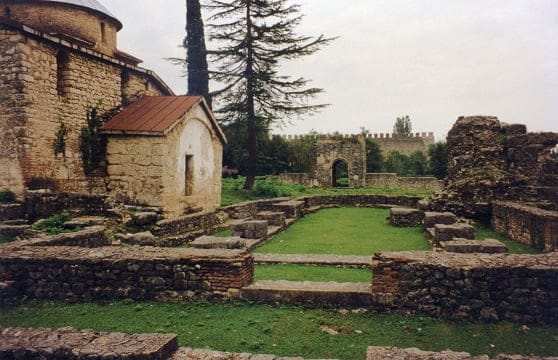
The impressive ruins of this ancient place nestled by the picturesque river Tekhuri:

Firstly, Nokalakevi is a village and archeological site in the Senaki Municipality. It is also known as Tsikhegoji (Fortress of Kuji).

Nowadays there are only impressive ruins of this ancient place nestled by the picturesque river Tekhuri, on the northern edge of the Colchian plain in Samegrelo.

Nokalakevi-Archeopolis:

This archeological site of Nokalakevi-Archeopolis occupies some 20ha and played a pivotal part in the major wars fought between Byzantines and Sasanians in the South Caucasus during the 6th century AD.

It was one of the key fortresses guarding the kingdom of Lazika (modern Samegrelo) from Sasanian, Persian and Iberian attack.

Intensive archeological study and works at the site began in the second half of the 19th century.

philologist Frédéric Dubois de Montpéreux;

Swiss philologist Frédéric Dubois de Montpéreux visited the place, identified the ruins of the ancient fortress and argued that it was an ancient city Aia, ancient capital of the Colchian kingdom also mentioned in the myth about Argonauts.

This stimulated scholarly interest about the archeological site and in the following decades a lot of teams of scholars and archeologists began to come in Georgia and visit Nokalakevi.

Frédéric Dubois de Montpéreux’s opinion was not confirmed and most scholars continued and still continue to prefer the traditional identification of Aia with Kutaisi.

The archeological excavations:

The archeological excavations were interrupted by the political upheavals and onset of war in the 1930.

But the interest in Georgia’s history continued to grow and prompted various visits and articles about Nokalakevi and its archeological importance.

Among the expeditions set up here the most important are: expedition in 1973 which undertook major excavations and conservation work at Nokalakevi until 1990s.

Then the collapse of the Soviet Union and civil disturbances in Georgia caused serious damage to the expedition’s infrastructure.

Long scale excavations were resumed in 200.

The Georgian professor David Lomitashvili:

It was a collaborative project headed by a Georgian professor David Lomitashvili and Anglo-Georgian expedition to Nokalakevi, which had trained over 100 archeologist students from nine different Georgian and British universities, plus volunteers from different countries.